रामायणஇராமாயணம்
Two poets, one epic, side by side.
Vālmīki's Sanskrit and Kamban's Tamil, read event by event, through the Sundara Kāṇḍa: Hanumān crosses the sea to find Sītā.
Start here
Finding Sītā: two views
In the aśoka grove, Hanumān sees a woman guarded by rākṣasīs. Vālmīki has him reason from the signs; Kamban has him ask, and answer with an image.
तां समीक्ष्य विशालाक्षीमधिकं मलिनां कृशाम् ।तर्कयामास सीतेति कारणैरुपपादिभिः ॥
tāṃ samīkṣya viśālākṣīmadhikaṃ malināṃ kṛśām |tarkayāmāsa sīteti kāraṇairupapādibhiḥ ||
“Seeing her, the wide-eyed one, so soiled and thin, he reasoned from the signs that fitted: this is Sītā.”
working translation for Rāmamayam
'கடக்க அரும் அரக்கியர் காவல் சுற்று உளாள்,மடக் கொடிச் சீதையாம் மாதரேகொலாம்?கடல் துணை நெடிய தன் கண்ணின் நீர்ப் பெருந்தடத்திடை இருந்தது ஓர் அன்னத் தன்மையாள்.
'kaṭakka arum arakkiyar kāval cuṟṟu uḷāḷ,maṭak koṭic cītaiyām mātarēkolām?kaṭal tuṇai neṭiya taṉ kaṇṇiṉ nīrp peruntaṭattiṭai iruntatu ōr aṉṉat taṉmaiyāḷ.
“She who is in the midst of a guard of rākṣasīs hard to get past — could she be the lady Sītā, the tender creeper? She is like a swan sitting in a great pool formed by the water of her own long eyes, which are equal to the sea.”
Working translation · Tamil text from Tamil Wikisource, CC BY-SA 4.0
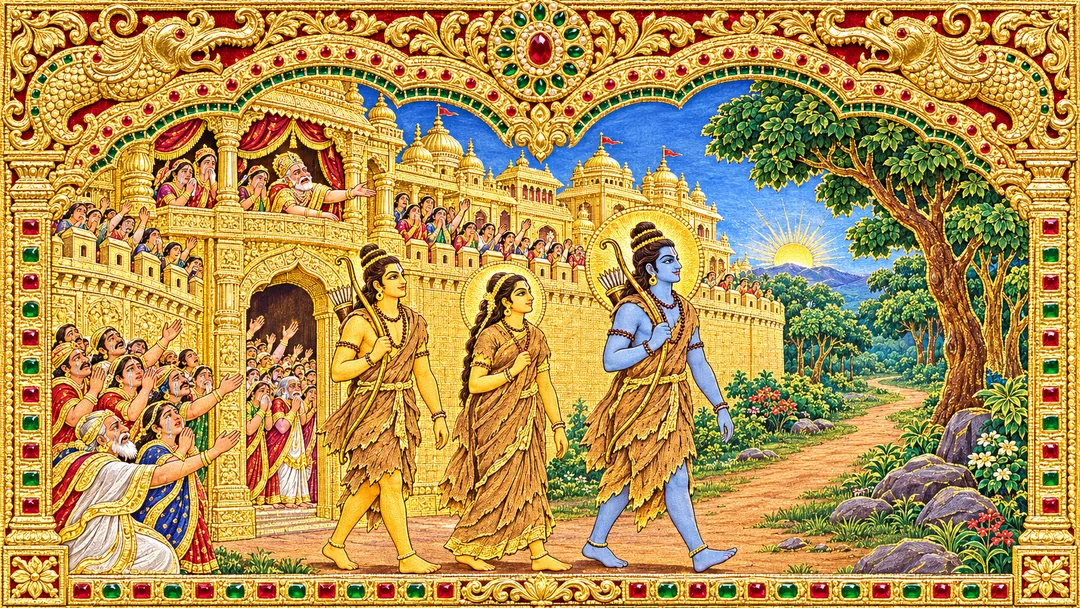
The epic turns on someone who could have said no.
On the morning he is to be crowned, Rāma is told he must leave Ayodhyā for fourteen years. He does not argue. He goes, and the rest of the Rāmāyaṇa follows from that one choice.
एवमस्तु गमिष्यामि वनं वस्तुमहं त्वितः । जटाजिनधरो राज्ञः प्रतिज्ञामनुपालयन् ॥
“So be it. I will go from here to live in the forest, in matted hair and deerskin, and keep the king's promise.”
What are you carrying?
Each opens the parts of the epic that speak to it.
A promise of refuge
सकृदेव प्रपन्नाय तवास्मीति च याचते ।अभयं सर्वभूतेभ्यो ददाम्येतद्व्रतं मम ॥
sakṛd eva prapannāya tavāsmīti ca yācate |abhayaṃ sarvabhūtebhyo dadāmy etad vrataṃ mama ||
“To anyone who comes to me even once and asks, saying “I am yours,” I give safety from every being. This is my vow.”
In short: Rāma's promise to anyone who asks for shelter, even the brother of his enemy.
One epic, seen all at once.
Explore lays the Rāmāyaṇa out as one map: kāṇḍas and sargas, the people in them, the places they pass through, and what leads to what.

What the map holds
- Kāṇḍas
- 7
- Sargas
- 648
- Ślokas
- 23,291
Between them: who speaks each śloka, where each event happens, who is family to whom, and what leads to what. People, places, events and ideas are being mapped now.
Point at the map, or tap on a phone. Drag sideways to turn it.
Seven kāṇḍas, out from Ayodhyā and back.
Read it in order, one sarga at a time, with the Sanskrit, a transliteration and an English translation for every śloka.
All seven
The Sundara Kāṇḍa is here now; the others are coming. Read remembers where you stopped.
Come in however suits you.
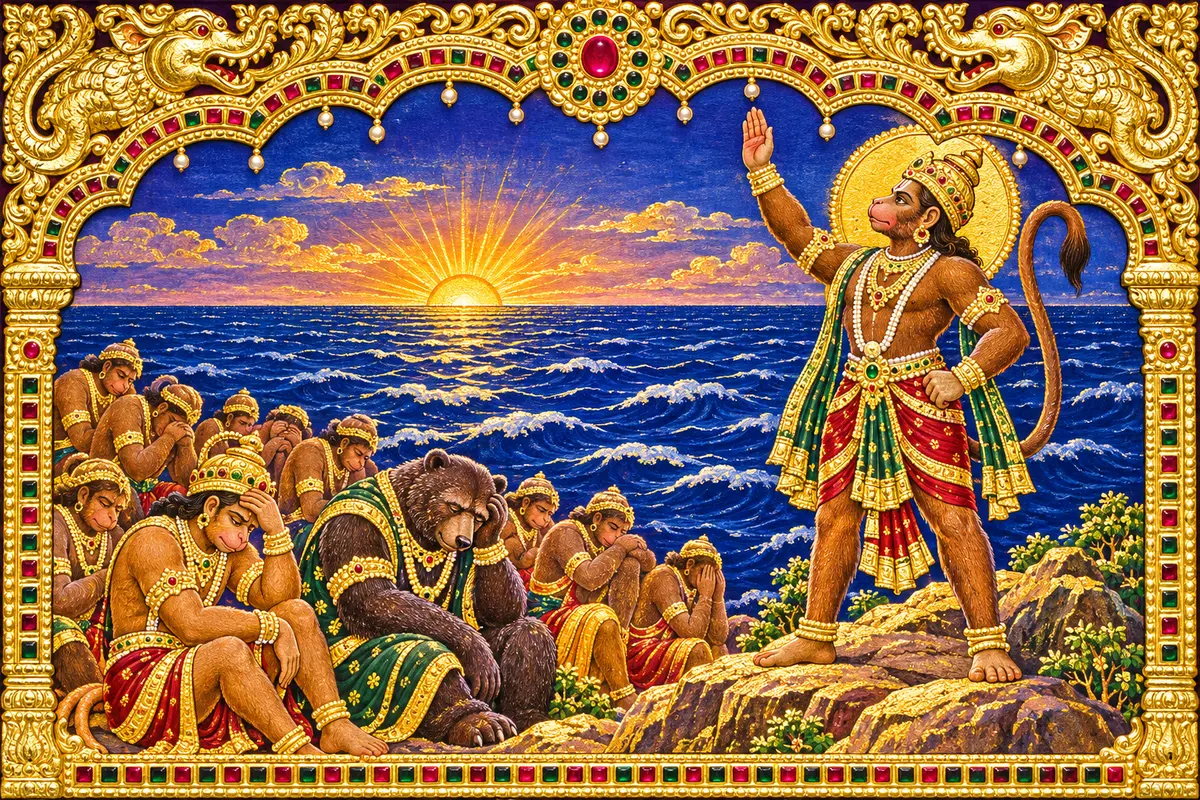
Your first five minutes
A short lesson on Hanumān's promise as he crosses the ocean (VR 5.1.132): the setting, the śloka, what it says in plain words, and where it meets everyday life.

Keep the verses that stay with you
In Read, keep any verse of either poet, with a note in your own words. Your kept verses gather in one place, in this browser.
Follow one thing to the next
In the Sundara Kāṇḍa, one leap leads to a search, a meeting in a grove, a capture, a burning city and the leap home. Lineage lays chains like this out step by step.
- The leap
- The search
- The aśoka grove
- He shows himself
- Captured
- Laṅkā burns
- The leap home
Ask Vālmīki's text
Answers are built from the ślokas and show which ones they draw on.
Free to read. Your writing stays with you.
Private by default
Kept verses and your notes are saved on this device, in this browser. They don't sync anywhere; export them when you want to move them.
AI is optional
Reading, search, the graph and suggestions all work without a language model. If you connect one, only the text you choose is sent.
Built on open texts
The Sanskrit comes from open datasets of Vālmīki's text, Southern recension. English is from public-domain translations or marked as a working translation.